K Enerji
Home › Radiators
04 · Radiators

Die-cast aluminium radiators and POE-68 assisted panel radiators

A fast-responding, modular heating solution for public-sector projects, sized precisely to the heat demand of each space.

Choosing the right radiator

A radiator that delivers heat to the room without delay

Every water-filled radiator heats in the same two ways: natural convection and surface radiation. What really sets radiators apart is how quickly and how precisely they manage that heat. A die-cast aluminium radiator is made up of sections, each produced in one piece by metal injection moulding, so the waterways and heat transfer surfaces share the same aluminium body.

Our sample section holds just 0.025 litres of water, weighs 1.4 kg and delivers 121 W under EN 442 testing at ΔT 50. Because there is little water to heat, the radiator reaches operating temperature quickly; because its mass is low, the system settles down fast as the thermostatic valve approaches the set point, reducing the risk of overheating. The aluminium body produces no iron oxide, limiting radiator-related magnetite formation, and it can be recycled at the end of its life.

Section count at low flow temperatures

With low-temperature heat sources such as condensing boilers and heat pumps, correct sizing becomes critical. The heat output of our 10-section sample radiator is 1,206 W at 75/65 °C, but drops to 888 W at 70/50 °C and to 599 W at 55/45 °C. That is why products are selected not just by size, but by the heat loss of the room and the required heat output (W).

In public buildings

Schools and public buildings are used intermittently throughout the day. A fast response means comfortable temperatures are reached sooner when lessons and working hours begin, while room-specific section counts and thermostatic valve settings let classrooms, offices and shared areas be controlled individually. Exposed top fins make regular cleaning easy.

POE-68 assisted panel radiator

Rather than circulating water through the entire radiator body, the POE-68 assisted panel radiator keeps it in a separate steel pipe with a 1.5 mm wall; a one-metre radiator holds just 300 cc of water. Heat taken from the pipe passes into a sealed POE-68 circuit, physically separated from the water, and spreads through the sections by evaporation and condensation. The aim is a faster thermal response and a more even surface temperature across the sections; a thermostat keeps the system below an upper limit of 60 °C.
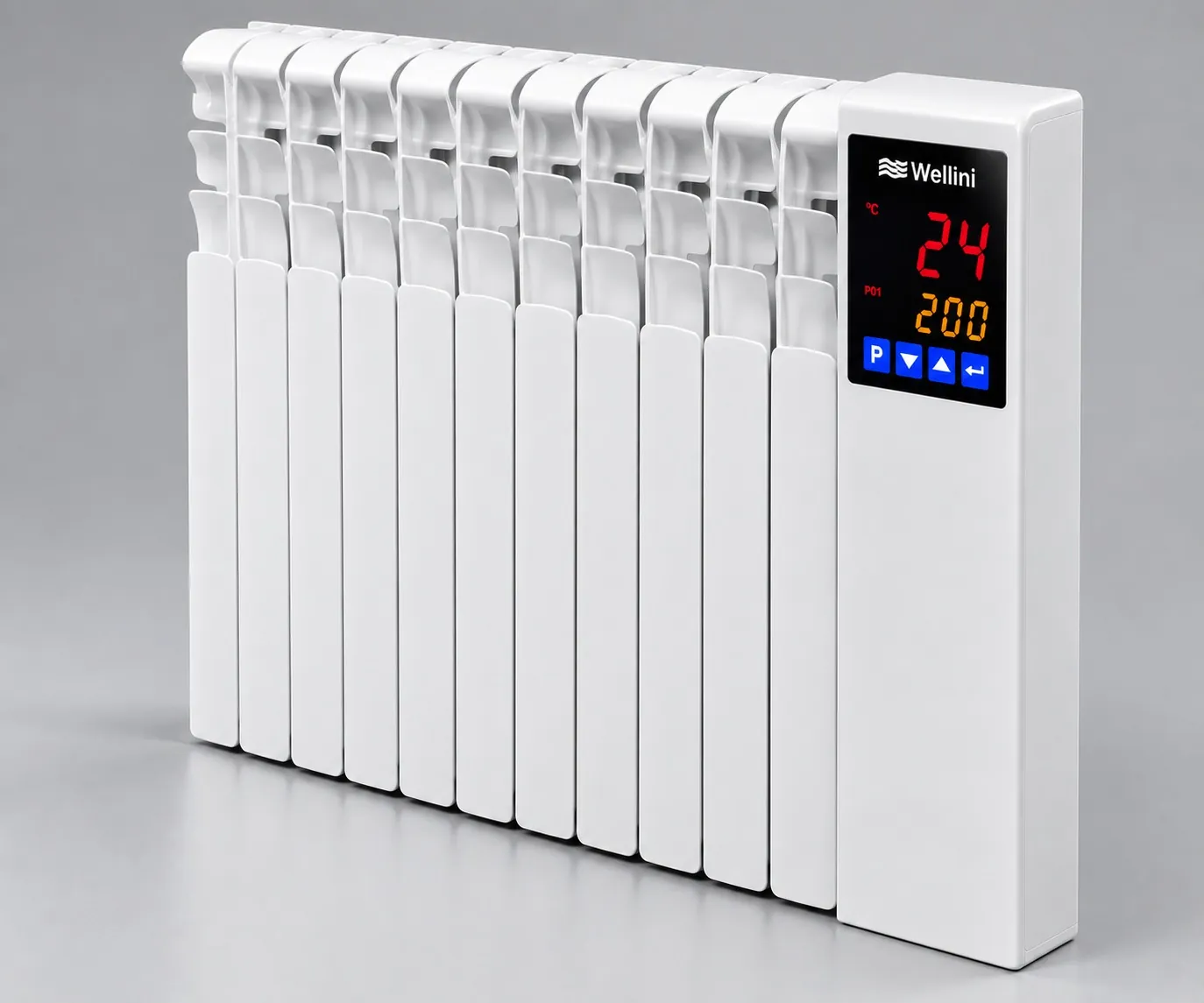
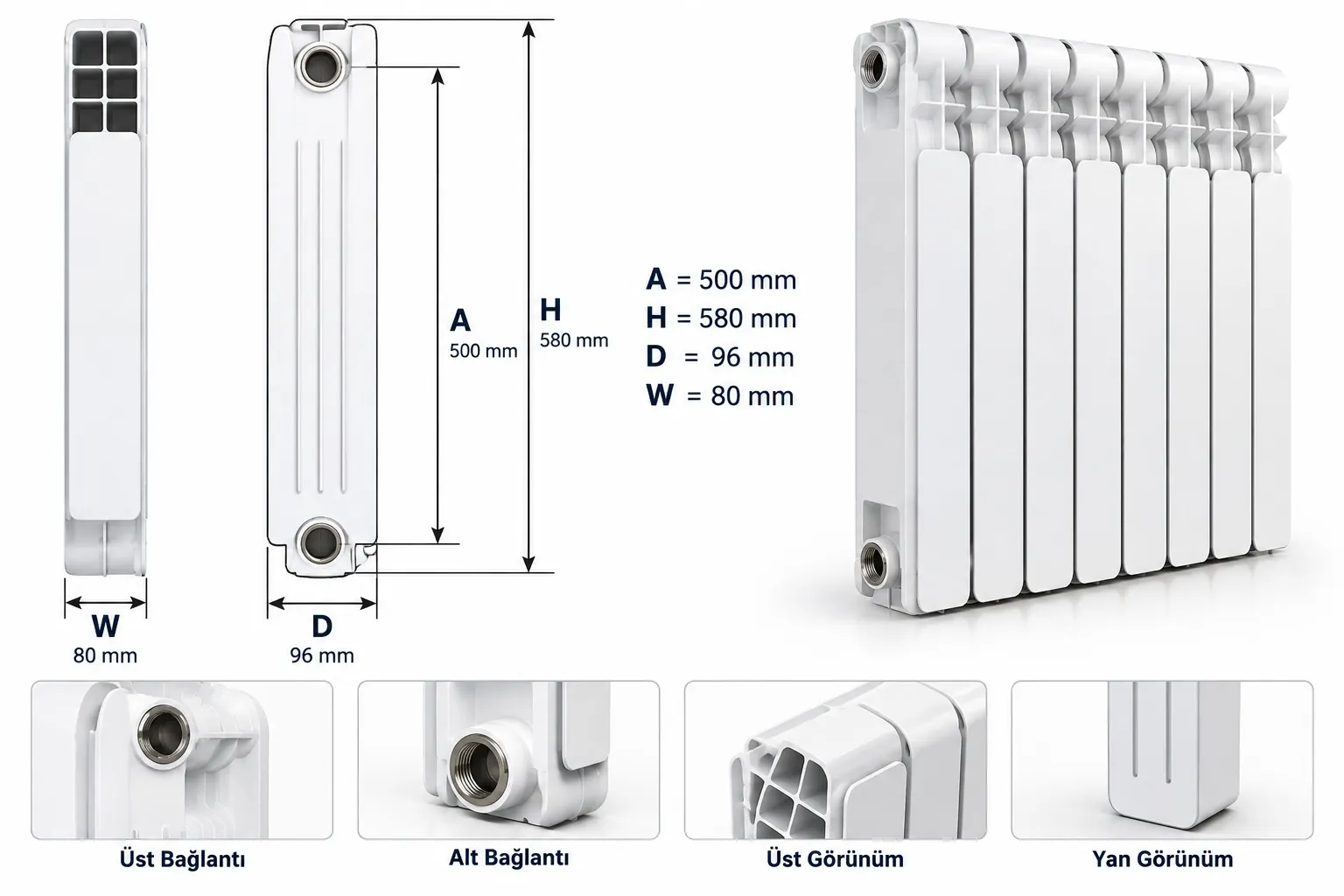
Die-cast aluminium radiator

What is a die-cast aluminium radiator?

A die-cast aluminium radiator is a modular heater made up of one-piece aluminium sections, produced by metal injection moulding, that transfers the heat carried by hot water in a central heating system into the room.

  • One-piece casting: The waterways and heat transfer surfaces are part of the same aluminium body.
  • Modular design: Radiator length is set by adding or removing sections to match the heat demand of the room.
  • Built for wet systems: Delivers energy from a boiler, heat pump or central hot water system into the space.
Die-cast aluminium radiator
Section dimensions: A 500 mm, H 580 mm, D 96 mm, W 80 mm

Sample cross-section: H 580 mm • W 80 mm • 500 mm centres

Technical data

Low water content, measurable heat output

Values refer to a sample section with an overall height of 580 mm. Final product selection should be based on a room heat loss calculation.

121 W

Heat output per section · EN 442 test value at ΔT 50

0.025 L

Water content per section · low volume, fast response

1.4 kg

Weight per section · easy to handle and install

12-section example: 1.452 kW • 0.3 L water • 16.8 kg
40 bar catalogue operating pressure • 80 mm section width • approx. 95 mm depth
How it works

Heat carried by hot water reaches the room in three stages

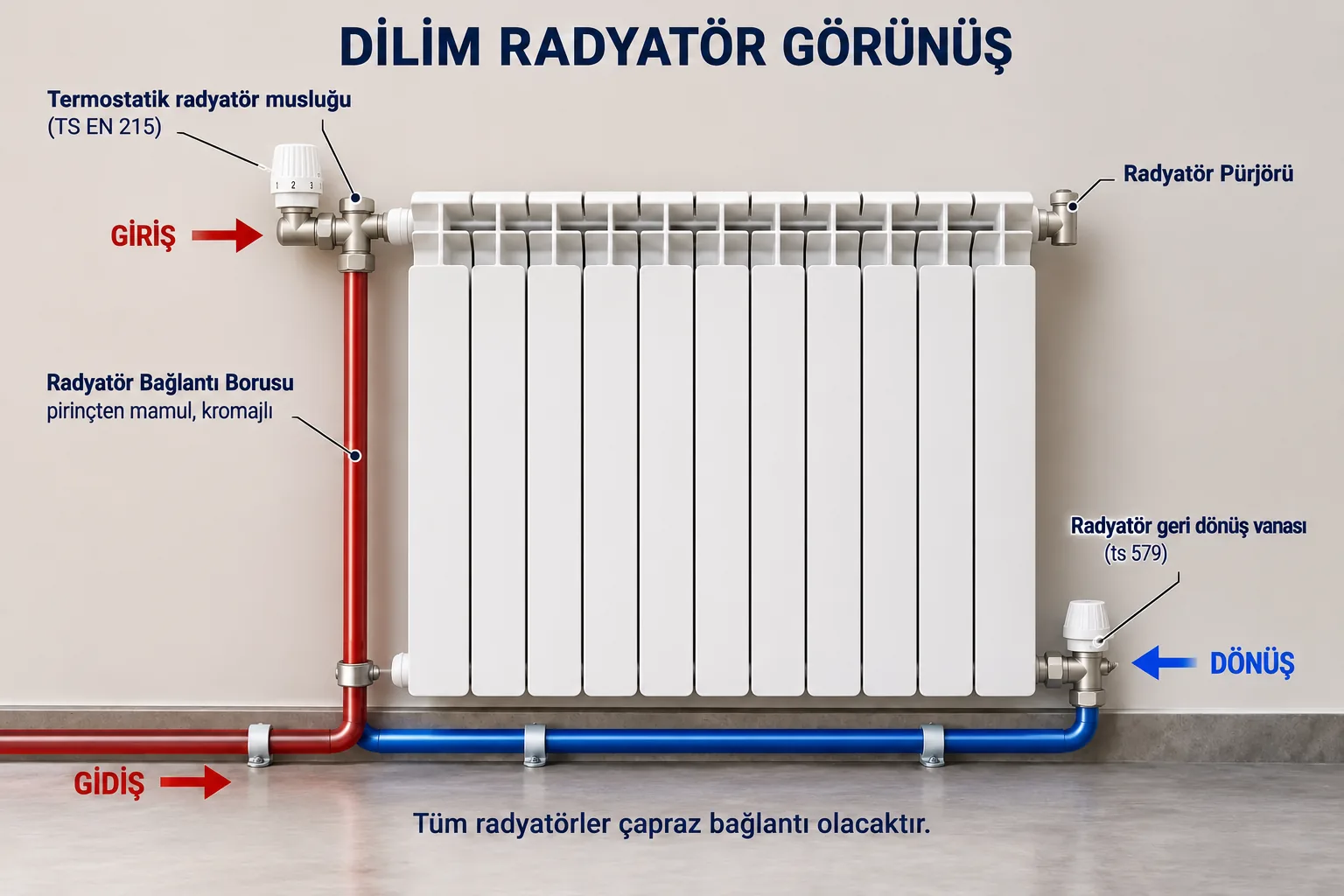
Sectional radiator view: thermostatic radiator valve, air vent, return valve, flow and return connections
01

Water circulation

Hot water is distributed to every radiator section through the chosen connection layout.

02

Rapid heat transfer

The heat carried by the water inside the radiator passes quickly into the aluminium body and its large surfaces.

03

Even heating

Natural air circulation and surface radiation work together to spread the heat through the room.

Material

The strength of aluminium: high conductivity, low thermal inertia

K Enerji radiators are designed to move the heat carried by the water quickly to the heating surfaces, rather than needlessly storing it in the body.

01

Conducts heat fast

Aluminium's high thermal conductivity spreads the energy taken from the hot water across the body and fin surfaces in a short time.

02

Low mass, fast response

With a weight of 1.4 kg and a water content of 0.47 litres per section, it responds quickly to on/off and thermostatic control signals. Being lighter than a pressed-steel panel radiator, it is easier to transport, distribute between floors and mount on the wall.

03

Clean circulation, not rust

The aluminium body produces no iron oxide, limiting radiator-related magnetite formation.

04

Recyclable material

Aluminium can be recovered at the end of its service life, supporting sustainable public investment.

The cross-section geometry carries heat to the surface without delay

One-piece cast waterways and large fin surfaces speed up heat transfer between water, metal and air.

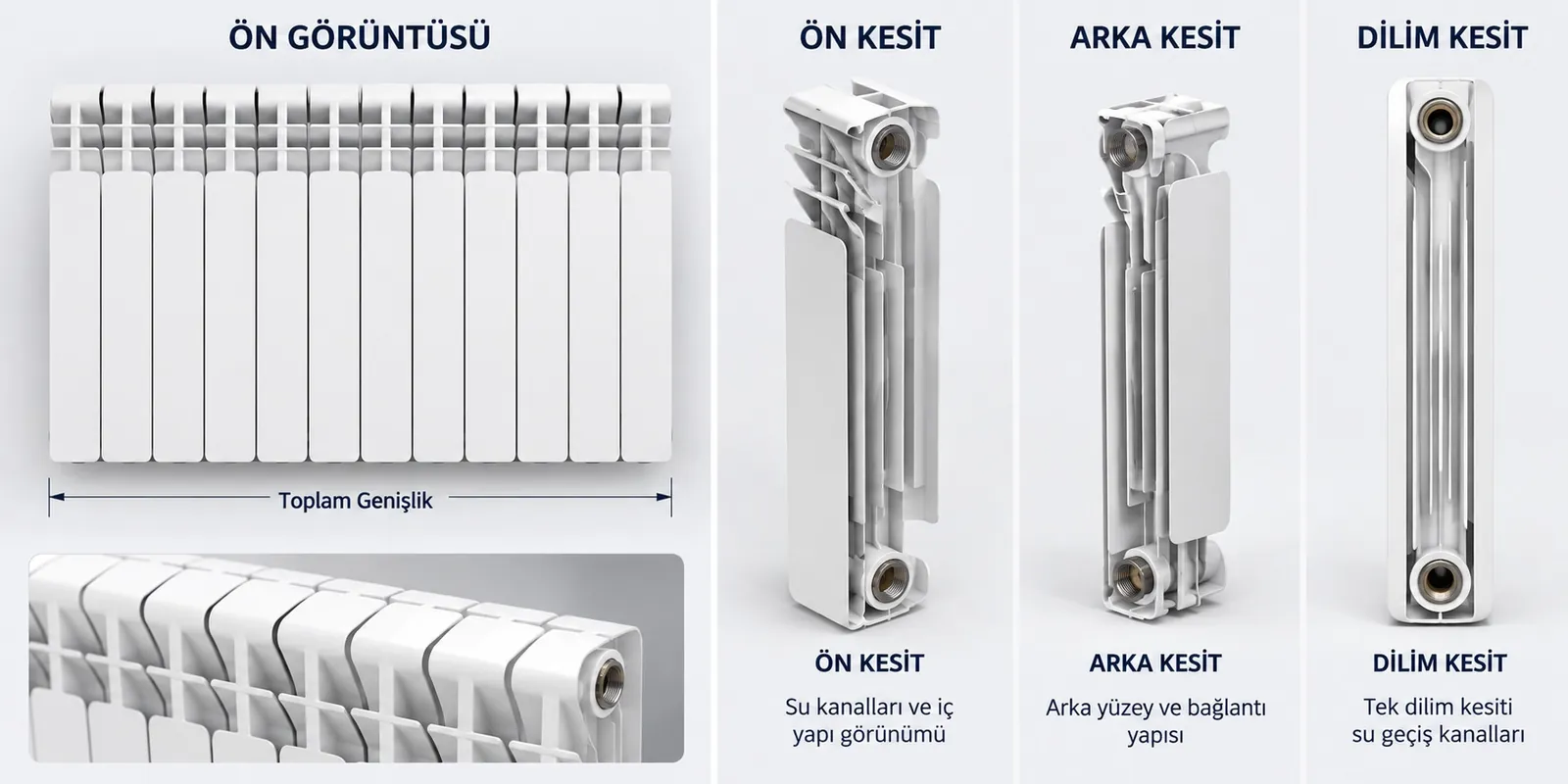
Front view, front section, rear section and section cross-section
01

One-piece waterways

In every section, the hot water meets the aluminium body across a large contact surface.

02

Large fin surface

The fin geometry increases the heat transfer area and supports natural air circulation.

03

Low water content

A water content of 0.47 litres per section reduces the amount of fluid that has to be heated, speeding up the thermal response.

Comparison

The difference is not in producing heat, but in how quickly you manage it

Every water-filled radiator works through both natural convection and surface radiation. K Enerji's advantage is its low thermal inertia and modular choice of output.

CriterionWellini die-cast aluminiumSteel panelAluminium panel
Heat emissionConvection + radiationConvection + radiationConvection + radiation
Thermal responseFast; 0.025 L and 1.4 kg per sectionDepends on panel type and water contentDepends on channel and body design
Air / surface geometryOpen, sectional fin designPanel with internal convector finsModel-specific panel/channel design
Access for cleaningExposed top finsInternal fins need regular cleaningVaries by model
Heat output comparison121 W per section • ΔT50 • EN 442Should be compared under the same EN 442 conditionsShould be compared under the same EN 442 conditions

What sets die-cast aluminium apart: fast, controlled heating

The table compares the general characteristics of each product group. Exact values may vary by brand, model and installation conditions.

CriterionDie-cast aluminiumSteel panelCast iron
Thermal responseFastModerateSlow
Water content / thermal inertiaLowModerateHigh
WeightLightModerateVery heavy
Design flexibilityNumber of sections set to demandFixed panel sizesSectional but heavy
Corrosion resistanceHighly resistant to rustRisk of rust, depending on system waterRisk of rust/sludge, depending on system water

Low thermal inertia turns energy into comfort more quickly

01

Less water, faster start-up

A water content of 0.025 L per section reduces the amount of fluid to be heated, so the radiator approaches operating temperature in a short time.

02

High conductivity

The heat carried by the water spreads rapidly through the aluminium channels and large fin surfaces, limiting unnecessary heat storage in the body.

03

Precise temperature control

Low mass and a thermostatic valve let the system settle faster as it approaches the set point, helping to reduce the risk of overheating.

04

Low-temperature operation

With the right number of sections, high comfort levels can be achieved at lower flow temperatures.

The result: K Enerji radiators move the heat carried by the water into the room quickly, without holding it in the body; with correct design and control, they help reduce unnecessary heat storage and temperature overshoot.
System design

At low temperatures, the right number of sections is critical

10-section NF 500 Ultra example • 20 °C room temperature • Catalogue heat output values

03006009001200 Watt 1206888599 75/65 °C70/50 °C55/45 °C

What does the chart show?

As flow and return water temperatures fall, the heat output of the same radiator decreases.

In low-temperature projects, the number of sections is recalculated to meet the required heat output.

Correct sizing supports efficient operating conditions for condensing boilers and heat pumps.

Products are selected not just by size, but by the required heat output (W).

Public buildings

Adapts to intermittent use in public buildings

  • Start of lessons and working hours: A fast response helps reach comfortable temperatures sooner under scheduled operation.
  • Frequent door and window opening: Helps recover more quickly from sudden heat losses.
  • Room-by-room control: Section count and thermostatic valve settings are matched to the heat demand of classrooms, offices and shared areas.
  • Indoor air hygiene: Exposed, accessible top fins make surface checks and regular cleaning easier, helping to limit dust build-up.
Product selection should be verified against room heat loss and the operating temperatures of the heating system.
Classroom heated by radiators
Office heated by radiators
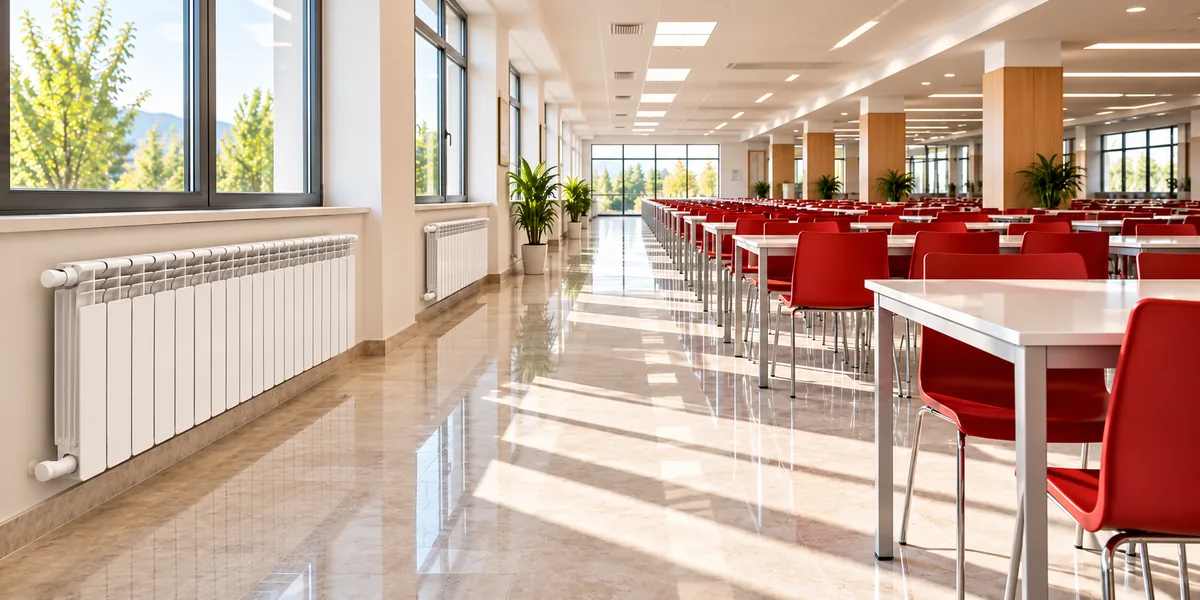
Dining hall heated by radiators
Choosing the right radiator for public projects

Fast Response + Modular Output + Verifiable Performance

Technical

Accurate room-by-room sizing based on EN 442 heat output data

Operation

A low-volume, precisely controlled design that quickly delivers the heat carried by the water into the room

Installation

Project-specific grouping, factory finish, connection kits and strong on-site support

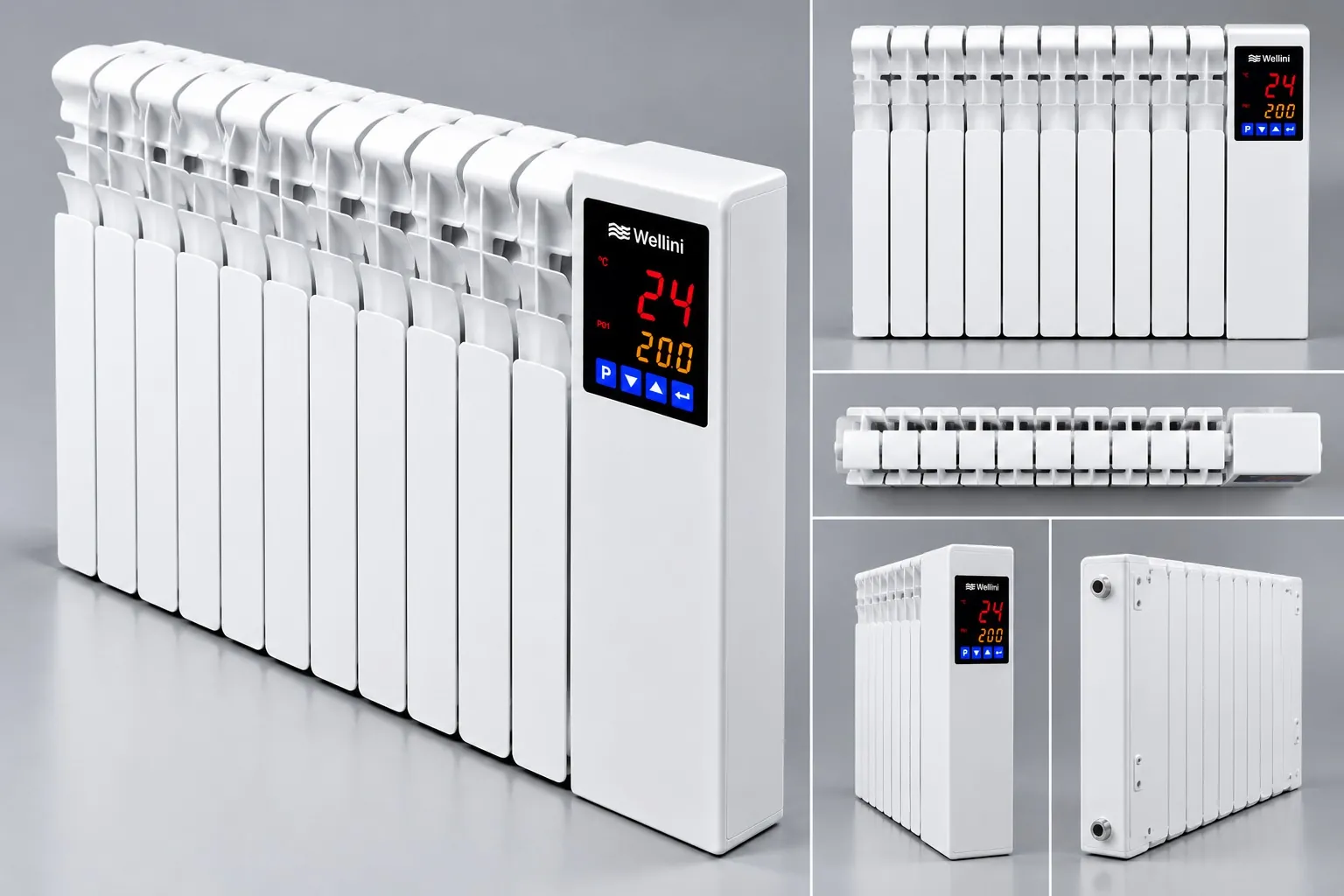
Die-cast aluminium radiator views
Next-generation panel radiator

POE-68 Assisted Two-Phase Heat Transfer Panel Radiator

“POE-68 Assisted, Low Water Content Radiator (Panel Radiator) with a Separate Water Circuit and Two-Phase Heat Transfer”

This invention relates to heating, heat exchanger systems, hydronic central heating terminals and two-phase heat transfer. In essence, it is a room heating terminal that uses hot water from the building's heating system as its primary heat source; however, instead of circulating the water through the entire radiator body, it keeps the water in a separate, low-volume steel pipe circuit. The heat taken from this pipe is transferred into a sealed POE-68 circuit, physically separated from the water circuit, and spread across the radiator sections.

→ Hot water (primary source) Steel pipe, 1.5 mm wall · ~300 cc/metre 1 2 3 Water circuitPOE-68In section separate pipeevaporatescondenses → heat Vapour rises Condensate flows back POE-68 liquid phase Illustrative operating principle · water and POE-68 never mix at any point · no pump or compressor

Main areas of application

  • Radiator heating systems in homes running on central or individual hot water supply.
  • Heating of offices, shops, hotels, educational buildings, public buildings and similar commercial or public spaces.
  • Terminal heater applications connected to hydronic heat sources such as boilers, condensing boilers, central hot water lines or heat pumps with a suitable flow temperature.
  • Radiator applications that call for a fast thermal response and lower water-side thermal inertia.
  • Heating systems aiming for a more even distribution of radiator surface temperature across the sections.
  • Indirect heat exchanger applications in which two different fluids exchange heat through a common solid wall without mixing.
  • In terms of technical classification, the invention is both a hydronic radiator/room heater and a heat exchanger/thermosiphon with a sealed intermediate heat transfer circuit that uses phase change.

The starting point for developing this panel radiator was three drawbacks of conventional water-circulating radiators: the radiator body and the water inside it take time to heat up; the surface temperature is uneven because the water cools as it flows from inlet to outlet; and the system responds to on/off commands with higher thermal inertia.

What this project sets out to achieve

  • Keeping the water content of a one-metre sample radiator at around 300 cc, reducing the thermal mass stored on the water side and the resulting thermal inertia.
  • Circulating hot water as a separate circuit in a steel pipe with a 1.5 mm wall, using it as the heat source without having to fill every cavity of the radiator body.
  • Transferring the heat conducted from the steel water pipe into a sealed POE-68 heat-spreading circuit that never comes into contact with the water, and using evaporation and condensation under suitable phase conditions to spread heat across the sections faster.
  • Aiming for a more even surface temperature by reducing very hot and very cold zones on the radiator surface.
  • Keeping the water and the POE-68 completely separate so that the working fluids cannot mix.
  • Using a thermostat and temperature control to keep the system below an upper limit of 60 °C and ensure controllable operation.
  • Defining the POE-68 charge as 50 g per section and 600 g per 12 sections/1 metre, creating a repeatable filling standard across prototypes.
  • Developing a high-strength body and leak-tight joints suited to the pressurised operation of the sealed POE-68 circuit.

Which problems does our panel radiator solve, and which design features solve them?

Problem addressedDesign featureHow it works
Thermal inertia and slow response caused by a high water content300 cc of water per metre of radiator, circulated in a separate circuit inside a steel pipe with a 1.5 mm wall.Reducing the mass of water to be heated targets a faster thermal response.
Surface temperature differences between radiator inlet and outletA sealed POE-68 heat-spreading circuit, separate from the water pipe, and radiator sections with a large surface area.In a suitable two-phase state, evaporation/condensation and natural circulation are intended to carry heat more evenly to the sections.
Risk of the water mixing with, or contacting, the intermediate working fluidIndependent lines for water and POE-68; the steel pipe wall forms a solid heat transfer barrier between the two fluids.The fluids do not share a common volume; heat is transferred by conduction.
Excessive temperature and uncontrolled heat inputA thermostat/temperature sensor working to a 60 °C upper limit, plus a control element that reduces or shuts off water flow/heat input.Controlling the temperature limits unnecessary overheating of the phase-change circuit and the body.
Prototype behaviour varying because of an inconsistent POE-68 chargeA controlled charge of 50 g per section, 600 g in total across 12 sections.Filling becomes repeatable; however, actual pressure/phase behaviour is verified separately against the net internal volume.
Need for leak-tightness and pressure resistance in the sealed POE-68 circuitA 100 bar body strength/test target, leak-tight joints, and gasket, weld and solder zones designed to the same strength requirements.A high strength margin is targeted for structural safety; the actual design and test pressure are determined separately according to engineering standards.

What are the advantages of our panel radiator, and which design features deliver them?

Advantage / goalDesign feature behind itTechnical reason
Fast thermal responseLow water content of 300 cc and a narrow, separate steel water circuit.Less water mass needs to be heated or cooled.
More even radiator surface temperatureSealed two-phase POE-68 heat-spreading circuit + large aluminium/sectional surface.Heat is spread to the sections using the latent heat of phase change and natural circulation.
No mixing of fluidsPhysical separation of the POE-68 volume by a steel water pipe with a 1.5 mm wall.Heat passes through the solid pipe wall; the fluids never flow in the same channel.
Controllable surface/system temperature60 °C thermostat upper limit and control element.Reducing or shutting off heat input limits excessive temperatures.
Modular production and capacity adjustmentSectional radiator body; 12 sections/1 metre in the sample design.Different capacity/size variants can be developed by changing the number of sections and body length.
Standardised chargeTarget charge of 50 g per section and 600 g per 12 sections.Prototypes share the same filling target; the charge-to-volume ratio is optimised through validation.
Structural design suited to a pressurised circuit100 bar body strength target and leak-tight joints.High structural strength is targeted to withstand the pressurised operation of the POE-68 circuit.
Intermediate heat spreading without a compressorThe POE-68 circuit acts as a passive two-phase working fluid inside the radiator.The system aims to distribute heat without needing its own compressor-driven refrigeration/heat pump cycle.
How many panels?Free solar calculator