K Enerji
Home › Air Purifier
05 · Tower Series

The air purifier that brings in fresh air

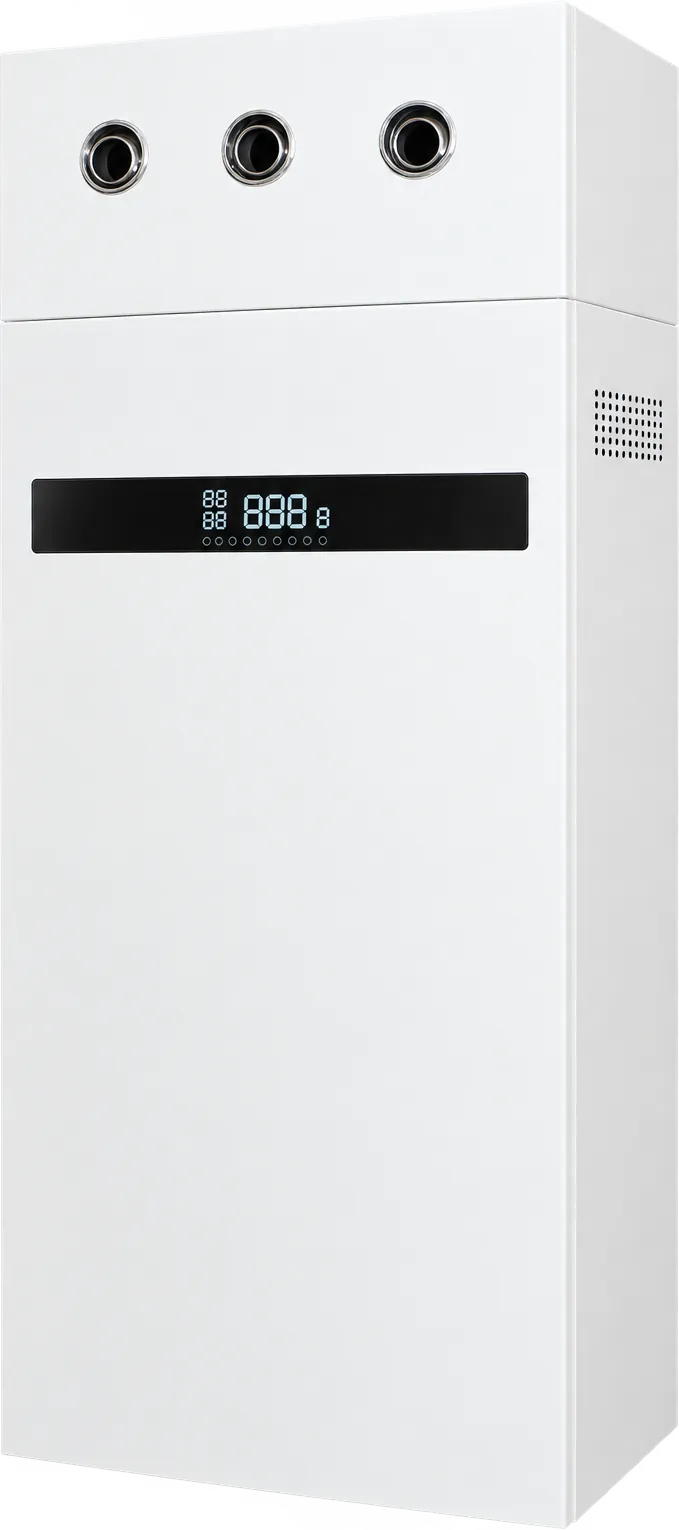
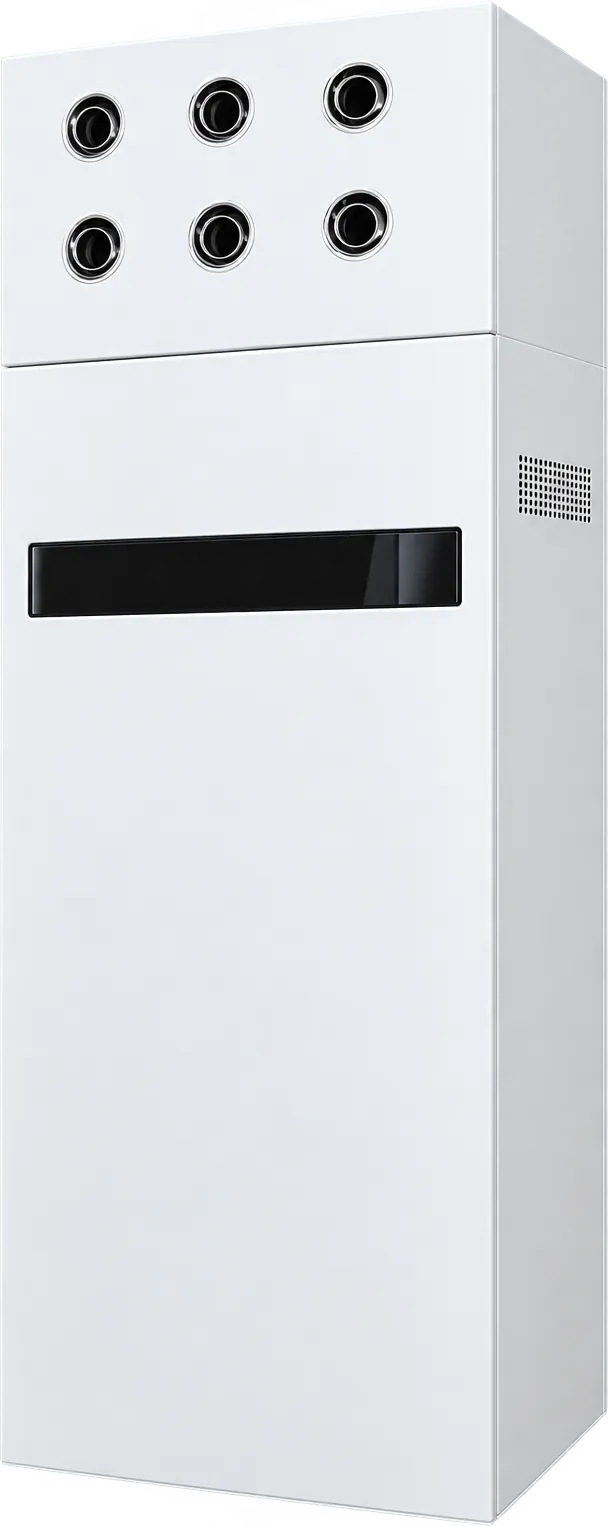
The Tower Series is a ductless unit that filters outdoor air in three stages before supplying it indoors, expels stale air outside, and keeps your heating or cooling energy inside the building as it does so.

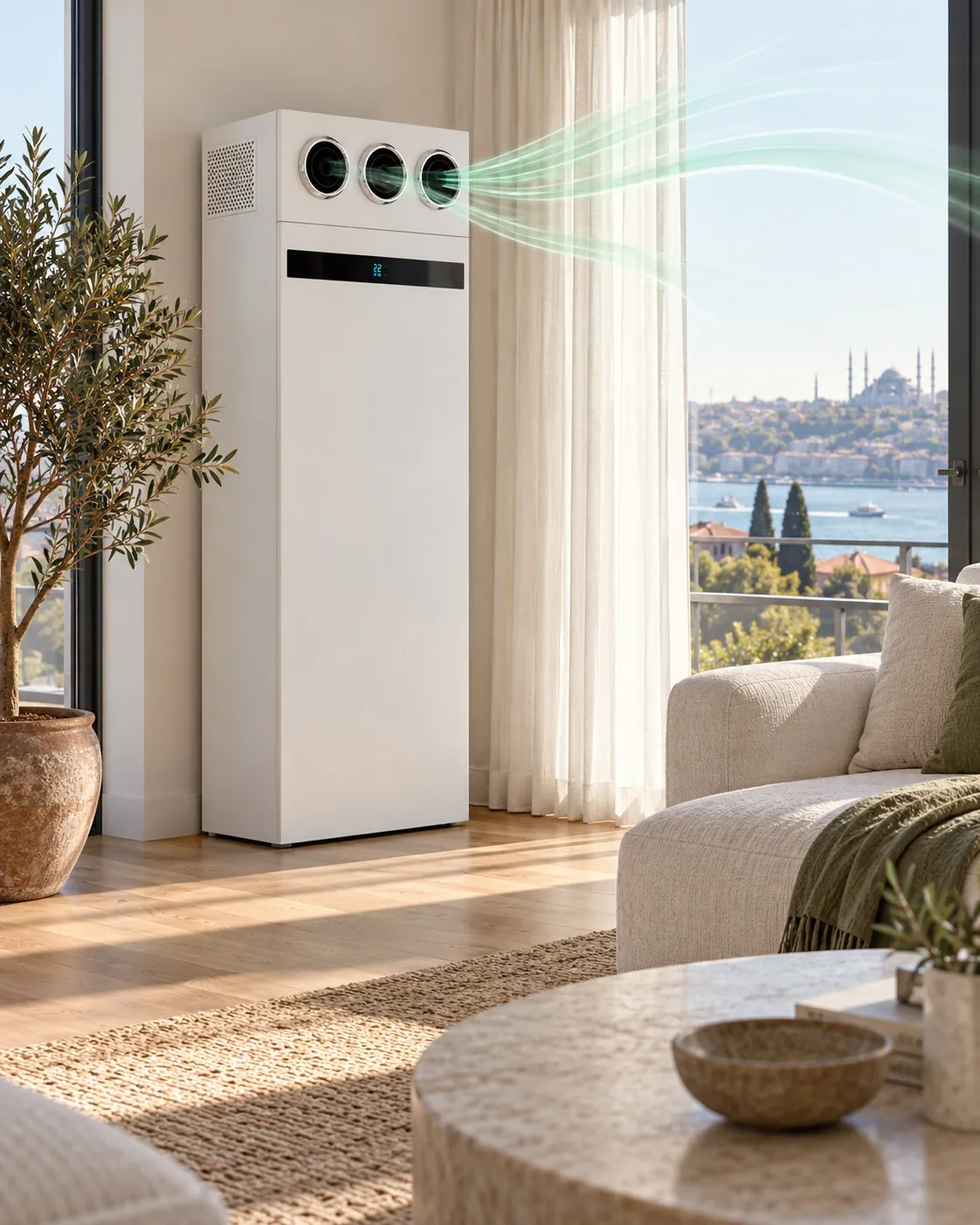
Tower Series fresh-air purifier in a living room overlooking the Bosphorus
Why you need it

Indoor air quality in energy-efficient buildings

External wall insulation, thermally broken frames and airtight windows all cut a building's heat loss. The same measures also all but stop the natural air exchange that older buildings get through gaps around doors and windows. Energy bills fall, but carbon dioxide, moisture, fine dust and volatile organic compounds build up indoors. A stuffy bedroom in the morning, a classroom that loses focus by mid-afternoon and mould forming around window frames are all familiar signs.

Two common fixes come to mind, and both fall short. Opening a window renews the air but lets heated air escape and lets in street dust and noise. Plug-in room air purifiers capture fine dust but bring in no fresh air from outside, so carbon dioxide and moisture stay where they are.

What does the Tower Series do?

The Tower Series combines the strengths of both approaches. One fan draws in outdoor air and, before it reaches the room, passes it through a pre-filter, a PM2.5 filter and a 99%-efficient HEPA composite filter. A second fan sends stale room air outside. The two airstreams meet in a cross-flow total heat exchanger without mixing, and the heat and moisture of the outgoing air are transferred to the incoming air.
Comparison

Open window, room purifier or Tower Series

CriterionOpening a windowRoom air purifierTower Series
Fresh outdoor airYes, unfilteredNoYes, filtered in three stages
Carbon dioxide and moistureReducedUnchangedContinuously expelled
Fine dust (PM2.5)Gets inCaptured inside the roomCaptured at the intake (99% HEPA)
Heating and cooling energyEscapes outsideNot affectedUp to 82% recovered
Street noiseGets inNot affectedWindows stay closed
ContinuityDepends on the userAutomaticAutomatic, sensor-controlled
Energy

Working alongside heat pumps and boilers

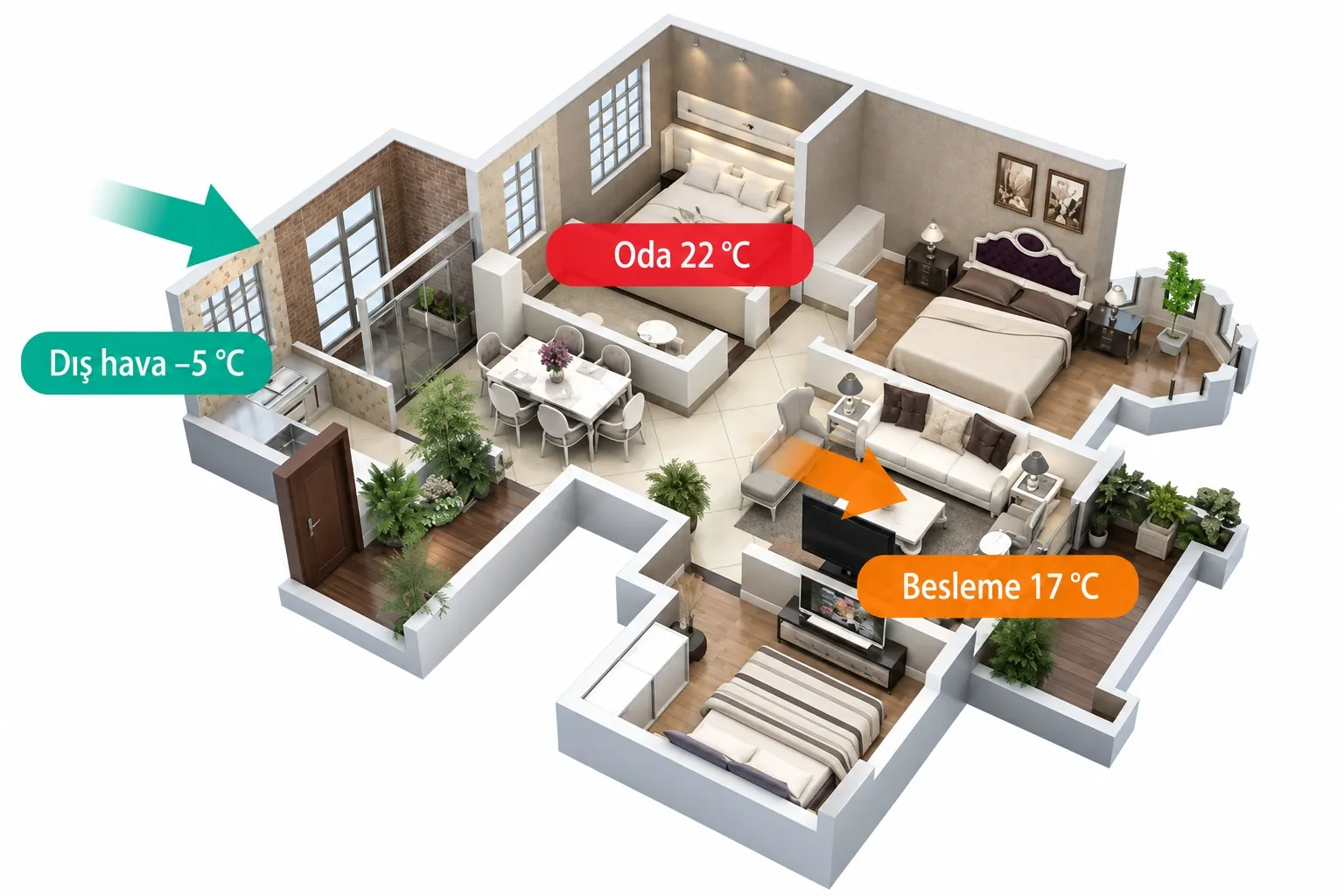
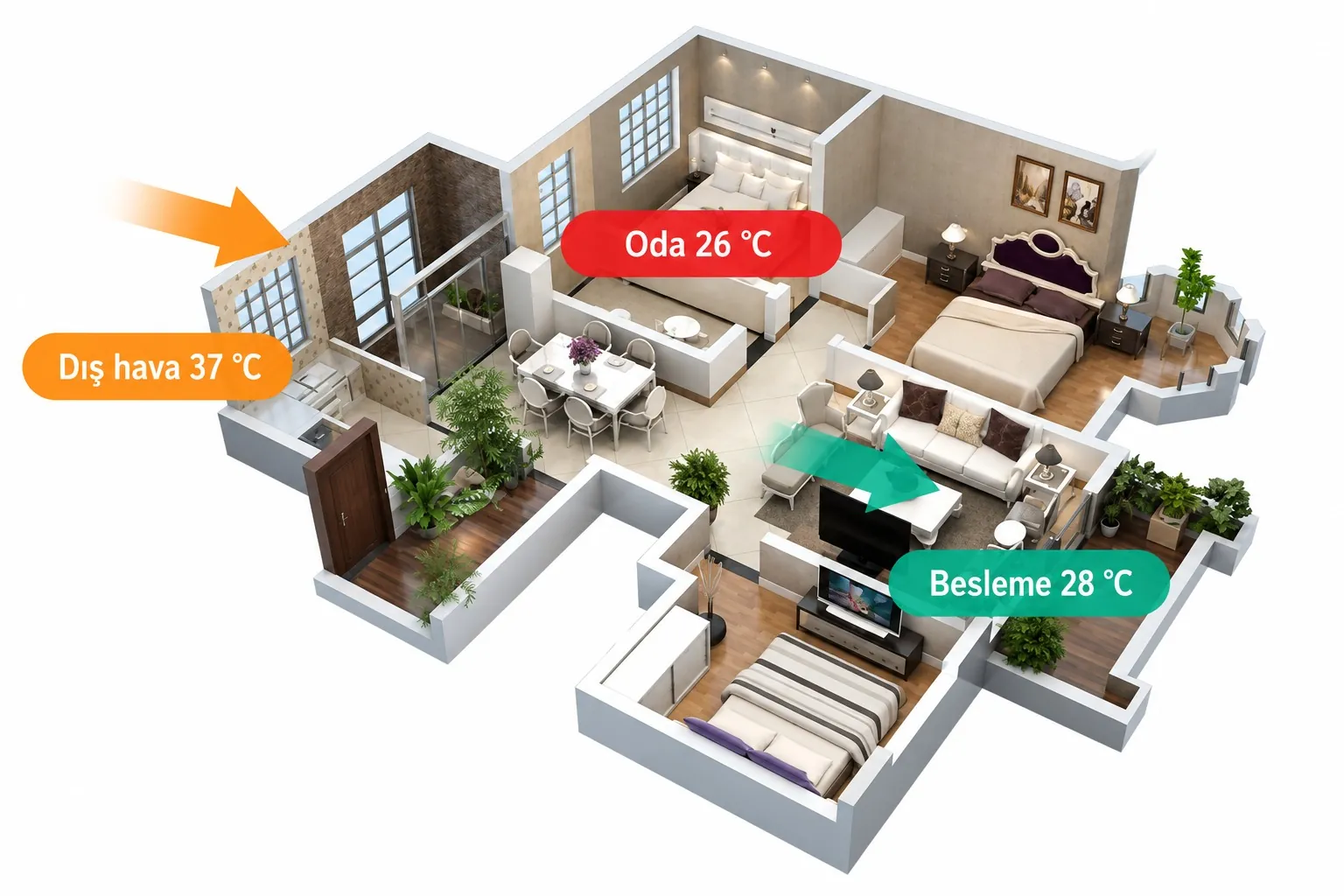
The Tower Series does not heat or cool; it preserves the air your existing system has already conditioned. In the brochure's winter example, outdoor air at minus 5 degrees leaves the exchanger and enters the room at 17 degrees; in the summer example, outdoor air at 37 degrees is brought down to 28 degrees.

Take the larger model on a winter day: 0 degrees outside, 22 degrees inside. Heating 600 m³ of fresh air per hour requires roughly 4.4 kW. The exchanger recovers about 3.6 kW of that from the exhaust air, leaving around 0.8 kW for the heating system. Meanwhile, the two fans together consume 125 W.

Note: This is a theoretical calculation for dry air (0.335 W·h/m³K × airflow × temperature difference). Actual values vary with fan speed, humidity and outdoor conditions.
Winter example: −5 °C outdoor air is supplied to the room at 17 °C
Summer example: 37 °C outdoor air is supplied to the room at 28 °C
Applications

For schools, offices and healthcare buildings

In existing buildings where ductwork is hard to install, two wall penetrations are enough to provide fresh air room by room.

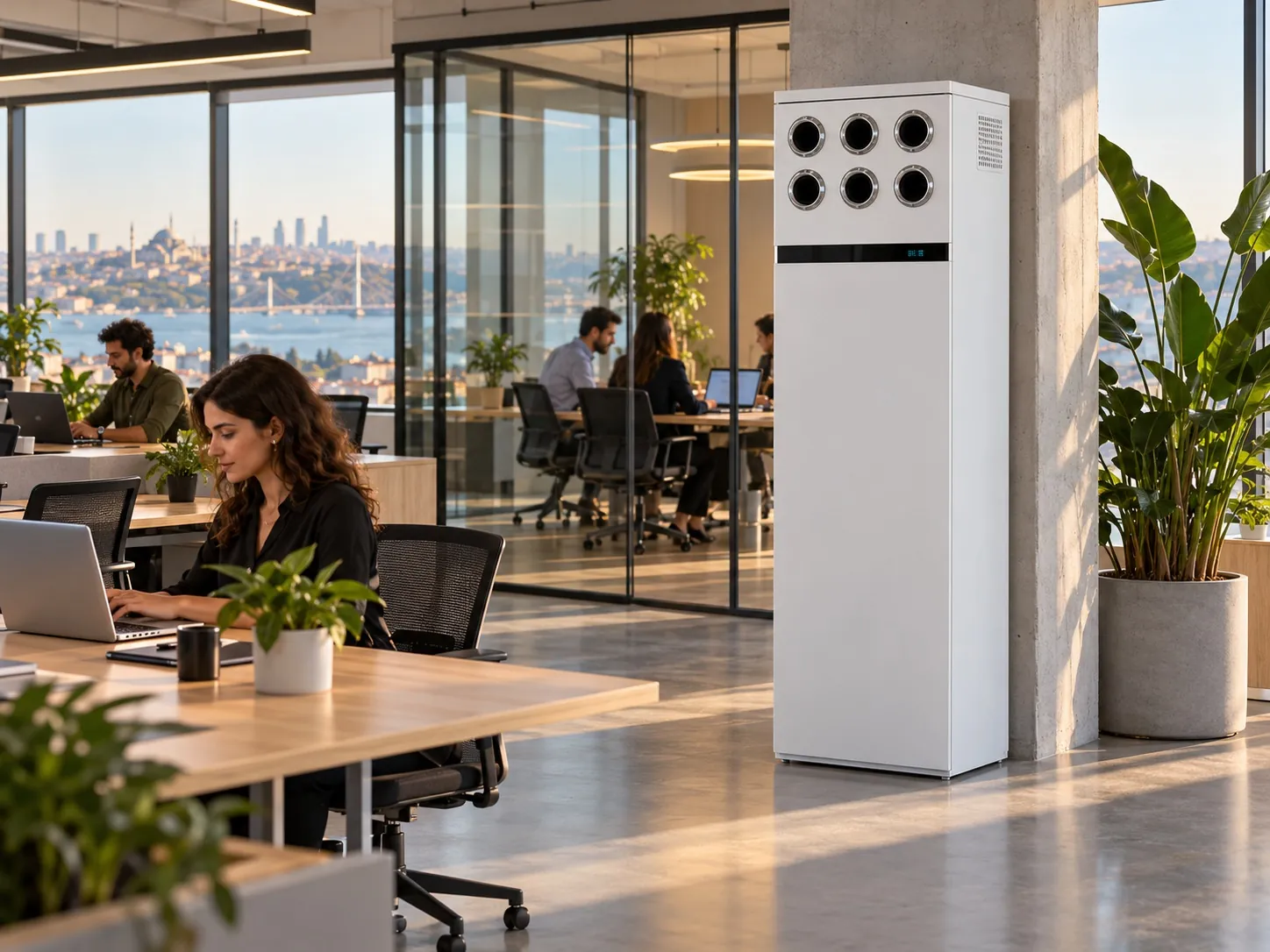
KE-ERV-V600 fresh-air unit in an open-plan office

Offices and meeting rooms

Carbon dioxide that builds up during busy meetings is continuously expelled, so staff get fresh air without opening a window.

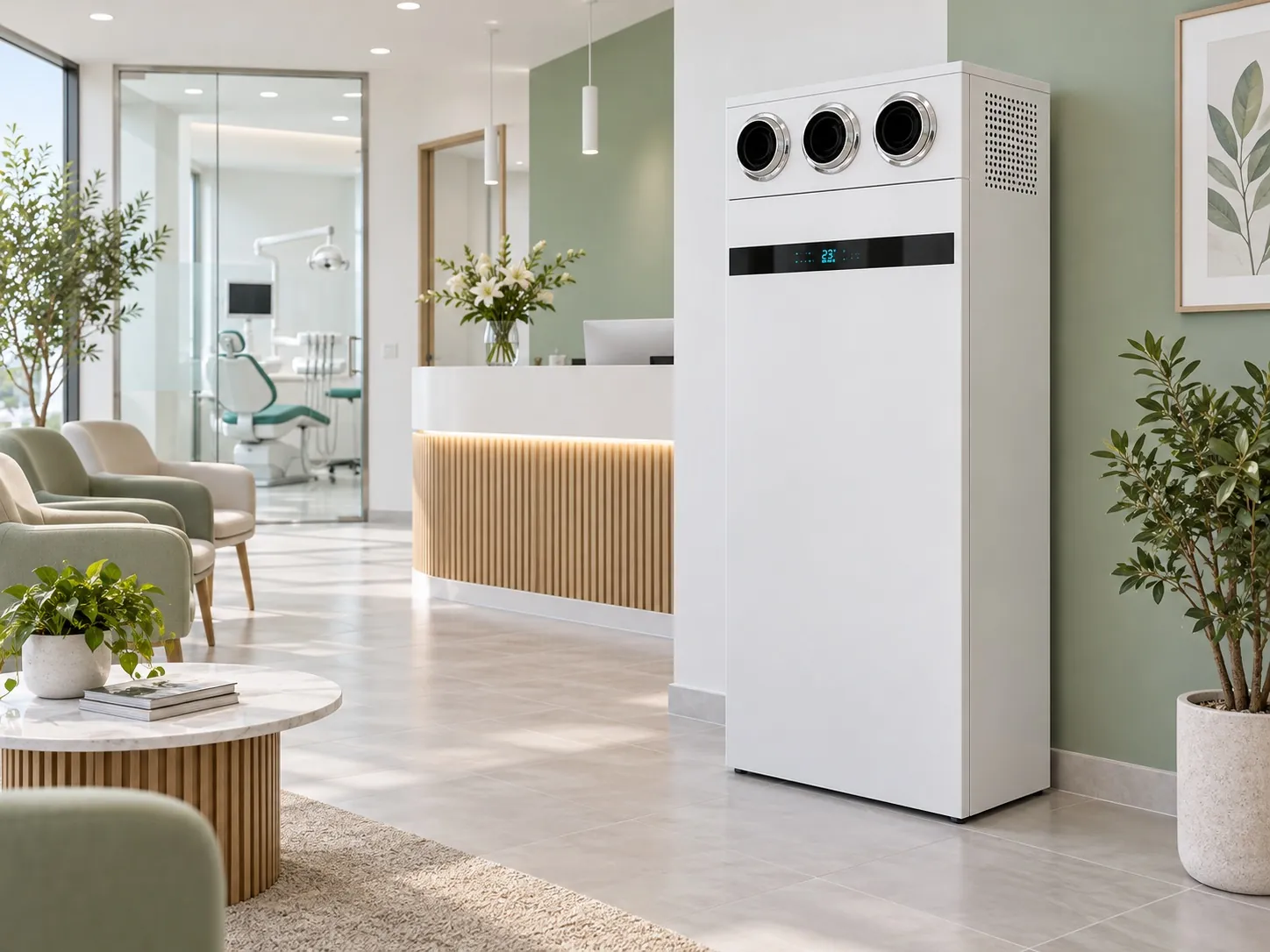
Fresh-air unit in a clinic waiting area

Clinics and healthcare units

In waiting and examination rooms, outdoor air is supplied through a HEPA composite filter and the room air is renewed regularly.

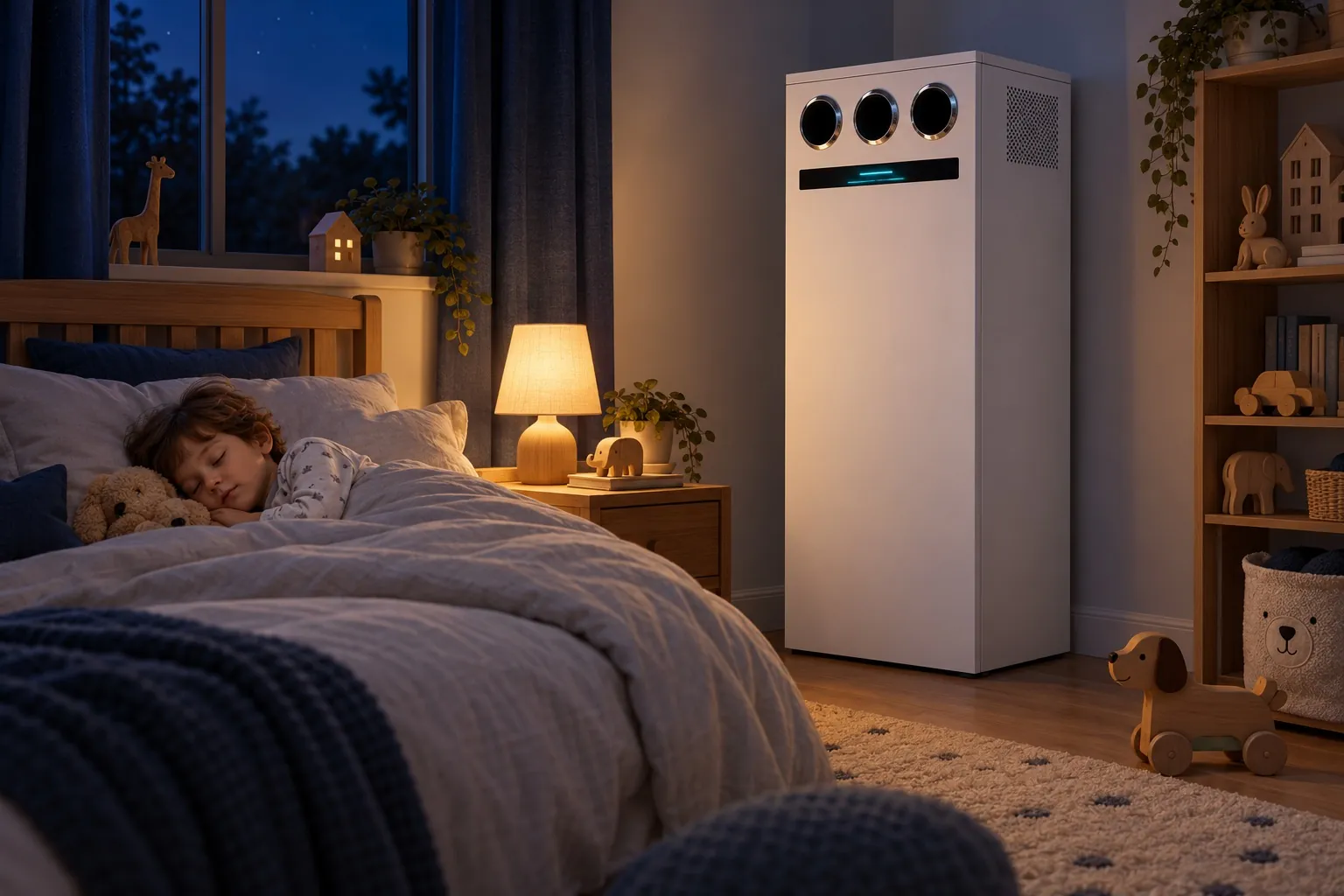
Fresh-air unit running quietly at night in a child's bedroom

Homes and bedrooms

At 23 dB(A) in sleep mode it runs all night, so you no longer wake up to stale air.

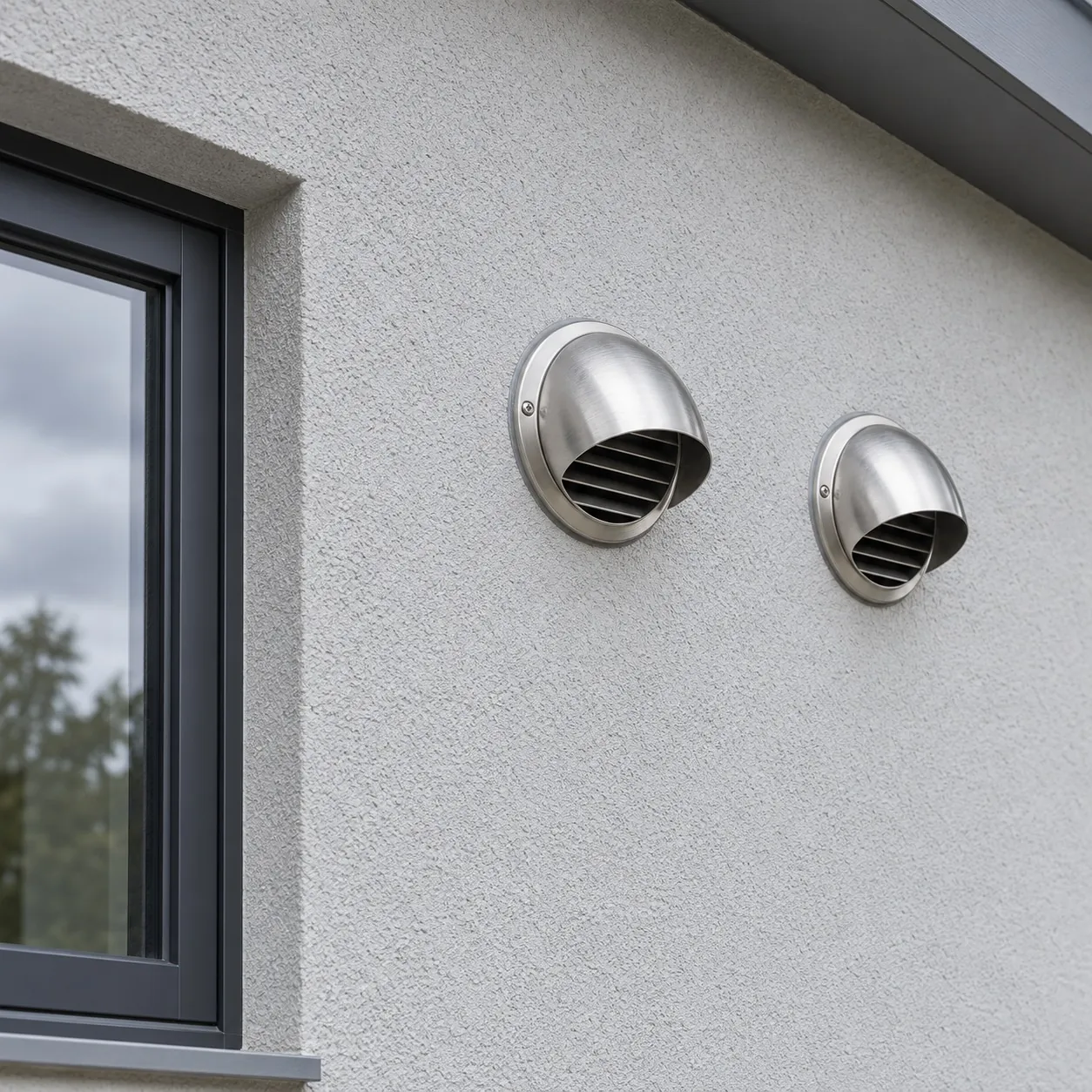
Two stainless steel hoods on the façade for fresh-air intake and exhaust
Installation

Ductless installation, two wall penetrations

The unit stands in front of an external wall. Two holes are made in the wall: one for the fresh-air intake and one for the exhaust. They are core-drilled with a 1–2% downward slope towards the outside, a weatherproof hood is fitted on the façade, and the gaps are sealed with polyurethane foam. No suspended ceiling, duct run or separate plant room is required.

  • An earthed 220 V~ socket is all it needs
  • Anti-tip bracket at the top
  • Hole positions are set to suit the unit during the site survey
Questions

Frequently asked questions about the Tower Series

Is an air purifier the same as a fresh-air unit?

No. A standalone room air purifier filters the air already inside and returns it to the same room; it brings in no new air. The Tower Series filters outdoor air as it draws it in and expels stale air outside. In other words, it both filters and ventilates.

Will the Tower Series add to the load on my heating system?

Incoming outdoor air picks up as much as 82% of the heat from the outgoing indoor air in the exchanger. As a result, the extra load on your heating system is far lower than when you ventilate by opening windows.

Can it be used in schools and public buildings?

Yes. At 600 m³/h, the KE-ERV-V600 suits a classroom or meeting room of about 20 people, based on 30 m³/h per person. Because no ductwork is needed, it can be fitted in existing buildings with minimal alteration.

Can it run on a solar power system?

The unit runs on a 220 V~ / 50 Hz mains supply and draws 70 W or 125 W at its highest speed. This low consumption is easy to factor into the self-consumption calculations of K Enerji's solar and energy storage projects.

Where can I get replacement filters?

K Enerji supplies the pre-filter, PM2.5 filter and HEPA composite filter. The pre-filters are washable; the PM2.5 filter is replaced every 6 months and the HEPA filter once a year.

Choosing the right model for your project

Send us the room dimensions and occupancy; we will plan the site survey, installation and filter supply together.

How many panels?Free solar calculator